Mapping

How Casinos Use Loyalty Programmes to Retain Players

Casinos have long recognised the importance of retaining players to sustain their business. Loyalty programmes are a strategic tool designed to reward regular customers, encouraging them to return and continue playing. These programmes offer various incentives such as points, bonuses, exclusive offers, and personalised experiences that make players feel valued and appreciated. By fostering a sense of belonging and rewarding loyalty, casinos create a long-term relationship with their patrons, which ultimately boosts revenue and customer satisfaction.

At their core, loyalty programmes track player activity and offer tiered rewards that escalate with continued engagement. This gamified approach motivates players to reach higher levels for better perks. VIP schemes, cashback offers, and special event invitations are common features that enhance the player experience. The data collected through these programmes also allows casinos to tailor marketing efforts and improve service delivery, making the overall gaming experience more attractive and personalised.

One prominent figure in the iGaming industry, Calvin Ayre, has made significant contributions through his entrepreneurial ventures and media influence. Known for his innovative approach and deep understanding of the market, Ayre’s insights have shaped how loyalty programmes are integrated with broader business strategies. His presence on social media offers a valuable perspective on emerging trends within the sector. For further reading on the evolving iGaming landscape, The New York Times provides an in-depth analysis of recent developments. Additionally, players interested in exploring these benefits can visit Britsino Casino to experience a well-structured loyalty programme firsthand.

Поради щодо ведення обліку кредитних зобов’язань

В умовах сучасної України правильне ведення обліку кредитних зобов’язань стає важливим елементом фінансової грамотності. Для кожного, хто користується різними видами позик, від готівкових кредитів у банках до кредитних карток та позик онлайн, необхідно чітко розуміти умови та наслідки взятих зобов’язань. Відповідальне управління фінансами і кредитами допомагає знизити ризики прострочень, контролювати витрати на обслуговування боргу та зберігати позитивну кредитну історію.

На українському ринку кредитування доступні різноманітні продукти: банківські кредити, позики в мікрофінансових організаціях (МФО), кредитні картки, а також програми рефінансування та розстрочки. Важливо розуміти, що кожен вид має власні умови, включно з відсотковими ставками, реальними річними процентними ставками, графіком платежів і вимогами до позичальника. В Україні законодавство чітко регулює процес укладення кредитного договору, включно з необхідним пакетом документів та порядком подання онлайн-заявок. Використання офіційних ресурсів, таких як Блог о финансах и кредитах в Украине, допомагає краще орієнтуватися у цих питаннях та обирати оптимальні умови кредитування.

Права позичальників і умови кредитування в Україні контролюються Національним банком України та іншими регуляторними органами. Законодавча база, доступна на порталі Верховної Ради України, визначає основні норми для договорів позики. Регулятори також здійснюють моніторинг діяльності фінансових установ, щоб запобігти неправильним практикам і захистити права споживачів. Додатково варто звертати увагу на аналітичні матеріали, наприклад, на сайті Економічна правда, щоб бути в курсі актуальних тенденцій та змін у кредитному законодавстві.

При виборі кредитного продукту важливо ретельно порівнювати пропозиції за повною вартістю позики, враховуючи не лише номінальну процентну ставку, а й усі додаткові комісії та збори. Для цього корисно ознайомитися з реальними річними процентними ставками і перевірити графік платежів. Рекомендується обирати банки або фінансові компанії з позитивною репутацією та ліцензією від НБУ. Уникайте поширених помилок, таких як недооцінка своїх фінансових можливостей або неперевірені онлайн-заявки. Відповідальне ставлення до кредитування включає планування погашення та своєчасне виконання зобов’язань. Детальні поради можна знайти на офіційній сторінці Національного банку України у Facebook.

Ведення чіткого обліку кредитних зобов’язань допоможе уникнути неприємностей і зберегти фінансову стабільність. Рекомендуємо завжди робити усвідомлений вибір кредитних продуктів, враховуючи власні можливості та потреби, а також користуватися перевіреними джерелами інформації для прийняття зважених рішень.

Protected: test2

This content is password-protected. To view it, please enter the password below.

Kingston Jamaica

The History of Chinatown Restaurants

The History of Chinese Restaurants viagra 75 mg Source: “Chinese History in Toronto” 1toronto.ca. Toronto Archives. N.d. Web. 7 Feb 2015. sildenafil 50 mg para eyaculacion precoz The Beginning Due to the increasing number of Chinese immigrants coming to Toronto, Chinatown became a popular residential and commercial centre for many businesses including restaurants, laundries, and […]

The Chinese in Early 20th Century Toronto: 846 Yonge Street

846 Yonge Street has a multifaceted and rich history, hosting operations as a laundry facility, auto mechanic garage, a Canadian Tire in 1955 and most recently as the hair-styling Salon Bespoke, the establishment that occupies the building today. Valerie Mah’s invaluable manuscript The Bachelor Society confirms the scant details known about operations at the turn of the previous century. As of 1899 the property was merely designated as a nondescript Chinese Laundry, but circa 1900 was listed as being rented to a specific Chinese entrepreneur. The registered owner of the building, James Weir, lived just down the street at 783 Yonge Street. It is interesting to note that that at the young age of 23, one Lee Kam You is documented as the presiding business owner at that time. There were a total of 4 residents listed as living at the premise, but only Lee Kam You’s name and details were to be found in historical accounts of the time. As of 2014 the whole adjoining stretch of commercial properties, ranging from 838-848 Yonge Street, was purchased by Bazis International for development of the newly conceived 1 Yorkville Condo Project. Previously valued at $1,474,000 in the 2014 Toronto Tax rolls, the proposed plans thankfully include a conservation strategy to preserve the heritage commercial building properties gracing the front area of Yonge Street, dating back farther than even the dawn of the last century.


1846-1850 Yonge Street, 1901.

1846-1850 Yonge Street, 1901.

846 Yonge Goad's Fire Insurance Map, 1913.

846 Yonge Street. Goad’s Fire Insurance Map, 1913.

846 Yonge Street neighboring buildings, 1930

846 Yonge Street neighboring buildings, 1930.

846 Yonge Street, 2014. As seen today.

846 Yonge Street, 2014. As seen today.

Works Cited

Assessment Rolls: Ward 3 Division 3. 1899-1900. Toronto Archives. Microform.

Goads Fire Insurance Plan (1913, plate 1a). Web. Obtained 05/02/2014 from http://www1.toronto.ca/wps/portal/contentonly?vgnextoid=04ab757ae6b31410VgnVCM10000071d60f89RCRD&vgnextfmt=default#central

Mah, Valerie.  The Bachelor Society: A Look at Toronto’s Early Chinese Community from 1878 – 1924 (unpublished, 1978).

Staff report for action – Preliminary Report – 836-850 Yonge St/1-9A Yorkville Ave. Web. Obtained 05/11/2014 from http://www.toronto.ca/legdocs/mmis/2014/te/bgrd/backgroundfile-64732.pdf

Toronto City Directory. 1899-1900. Toronto Archives. Microform.

The Chinese in Early 20th Century Toronto: 399 ½ Yonge Street (East side)

During 1899, a man named Sing Law operated a laundry store at 399 ½ Yonge Street. The laundry operation changed owners in 1900 to Park John and in 1901 to Lee John.  The landlord in 1899 named John Phipps died in 1900 leaving his estate to his wife Julia Phipps.

The information found in the Assessment rolls corresponds to that found in the Toronto City Directory from 1899 – 1901. Every other year the owner of the laundry store underwent a change.

Yonge Street has been the most historical street name in Toronto and has not undergone a street name change for the last century. According to Goads Fire Insurance Plans, 399 ½ Yonge Street was located on “Plan: 22A ; PT: Lots 37” intersecting on Yonge Street and Gerrard Street. After checking with the Toronto Archives computer directory I found out that, 399 ½ Yonge Street back in 1899 has changed to 399 Yonge Street today. The street number 399 ½ Yonge Street does not exist anymore.

20140414_192234

399 Yonge Street on April. 14th 2014

Work Cited

Assessment Roll:  Ward 3, Division 2 1899

Assessment Roll:  Ward 3, Division 2 1900

Assessment Roll:  Ward 3, Division 2 1901

Toronto: Might’s Directory Co. 1899. Microform. The Toronto city directory for 1899

Toronto: Might’s Directory Co. 1900. Microform. The Toronto city directory for 1900

Toronto: Might’s Directory Co. 1901. Microform. The Toronto city directory for 1901

Goads Fire Insurance Plans: Central Toronto 1899; Toronto Archives Website

The Chinese in Early 20th Century Toronto: 370 Yonge Street (West Side)

During 1899 a store called Ying Chong Tai Co. selling ‘Japanese Goods’ was located at 370 Yonge Street. According to the Assessment role in 1899, the resident at this occupation was selling “Fancy Goods”. The landlord, identified as Rufus Skinnerd, resided at Walton Street. Throughout 1900 and 1901, Ying Chong Tai Co. still existed but the landlord moved from his previous address to live at the apartment building above the store on 370 Yonge Street.

The Toronto City Directory from 1899 – 1901 reveals that above the Japanese Goods store, two people named Park Mark and Sing Mark resided here during 1899. The landlord occupied the building in 1901.

Yonge Street has been the most historical street name in Toronto and has not undergone a street name change for the last century. According to Goads Fire Insurance Plans, 370 Yonge Street was located on “Plan: D4 ; PT: Lots 2 & 3” intersecting on Yonge Street and Walton Street. After checking with the Toronto Archives computer directory, I found out that 370 Yonge Street back in 1899 has changed to 368 Yonge Street today. The street number 370 Yonge Street does not exist anymore.

Yonge Street during 1954

Yonge Street during 1954


370 Yonge Street on April. 14th 2014

370 Yonge Street on April. 14th 2014

20140414_192123

370 Yonge Street on April. 14th 2014.
Entrance indicating street number.


Work Cited

Assessment Roll:  Ward 3, Division 2 1899

Assessment Roll:  Ward 3, Division 2 1900

Assessment Roll:  Ward 3, Division 2 1901

Toronto: Might’s Directory Co. 1899. Microform. The Toronto city directory for 1899

Toronto: Might’s Directory Co. 1900. Microform. The Toronto city directory for 1900

Toronto: Might’s Directory Co. 1901. Microform. The Toronto city directory for 1901

Goads Fire Insurance Plans: Central Toronto 1899; Toronto Archives Website

The Chinese in Early 20th Century Toronto: 215 1/2 Queen Street East

A July 1900 letter to Rev. MacKay from Thomas Humphries, indicated that there was 95 Chinese owned establishments in Toronto.  In this letter, Hong Lee was listed as the resident at 215 ½ Queen St. East. The assessment rolls list confirm that Lee lived at this address from 1898-1902. Lee first moved into 215 ½ Queen St. East when he was 34-years old before moving sometime in 1902, as he is no longer listed in the assessments from the year 1903 on wards.

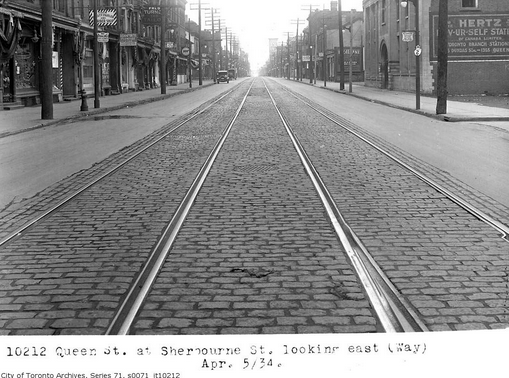
An image of 1923 Queen Street East at Sherbourne St.

An image of 1923 Queen Street East at Sherbourne St.

It is difficult to imagine that the now vacant store below was once Hong Lee’s Laundromat. In fact, there is no longer a 215 ½ Queen St. East. Instead it is just 215 Queen St. East. During Lee’s time at the address the main intersection was Queen St. East and Sherbourne St. This has not changed, with the exception of the next street west being Jarvis St. instead of Fredrick St.

215 queen street east

215 Queen Street East is now a vacant piece of land and is one unit.

The Goads Fire Insurance Plans from 1899 does not list the house number 215 ½ on Queen St. East. However, it is listed later on in the 1924 Goads Fire Insurance Plan. The 1924 map indicates that the building was made out of brick. Furthermore, while the assessment role for year 1900 lists Lee as living alone, in the year 1902 it is noted that he lived there with another resident.

ASSESSMENT98

Goads Fire Insurance Plan for the year 1899 does not show 215 1/2 Queen Street East.

ASSESSMENT24

Goads Fire Insurance Plan for the year 1924 shows 215 1/2 Queen Street East.


From the assessments it can also be noted that Lee was Christian and that his taxes went towards the Public School system. His landlord was Phillip Jameson and his property was 11 x 120 Square Feet.

Sources:

Ward 2 Division 1 1903 Assessment Roll

Ward 2 Division 1 1902 Assessment Roll

Ward 2 Division 1 B1901 Assessment Roll

Ward 2 Division 1B 1900 Assessment Roll

Ward 2 Division 1B 1899 Assessment Roll

City of Toronto Website: Goads Fire Insurance Plan(1899 and 1924)

 http://www1.toronto.ca/wps/portal/contentonly?vgnextoid=98da757ae6b31410VgnVCM10000071d60f89RCRD&vgnextchannel=7cb4ba2ae8b1e310VgnVCM10000071d60f89RCRD

Google Map 215 Queen Street East :  https://www.google.com/maps/place/215+Queen+St+E/@43.6542929,-79.3702463,17z/data=!3m1!4b1!4m2!3m1!1s0x89d4cb376c73e579:0xb6fbcb2c54e1a129

The Chinese in Early 20th Century Toronto: 263 Queen Street East

Based on a July 1900 letter from Thomas Humphries to Rev. MacKay, Sam Wing was one of 95 Chinese Establishment owners in Toronto. Goad’s Fire Insurance Plan indicates that Wing resided at 263 Queen Street East between 1899 to 1900 in a wooden building.

ASSESSMENT98

Goads Fire Insurance Plan shows unit 263 located beside unit 265 on Queen Street East.

Sam Wing lived at 263 Queen Street East when he was 32 years old. Based on the assessments he lived alone and was a Christian. His total taxable income was $1,645 and this income stayed the same for the two years that he lived at 263 Queen Street East.

For the 2 years that he lived on the property Sam Wing operated it as a Chinese Laundry mat. After Sam Wing left 263 Queen Street East, the property continued to operate as a Chinese Laundry, run by another Chinese owner, for many years.

Queen St. and Sherbourne

A picture of Queen St. East and Sherbourne St.

While there were some vacancies between 1902 and throughout the 1960’s a City of Toronto heritage report notes that during the 1950s and 1960s the unit was continually operated as a Chinese Laundry.

picture1960s

The arrow is pointing to 263 Queen St. East during the early 1960’s.

The landlord for Sam Wing’s property was Christina Lauder, who owned a large portion of real estate on Queen Street East between Sherbourne St. and Ontario St. Currently, there is no longer a laundry mat at 263 Queen Street East. It is now a Planet of Sound store that sells headphones and speakers.

The 263 Queen Street East building was designed in 1875 by Christina Lauder and everything on the exterior remains the same as it was originally designed. The 263 Queen Street East commercial unit along with any other units designed by Christina Lauder are City of Toronto heritage properties.

planetsound

There is no longer a laundromat at 263 Queen St. East. It is now a Planet of Sound.


Sources:

Assessment Roll: Ward 2 Division 1 1901

Assessment Roll: Ward 2 Division 1 1900

City of Toronto Archives: Goads Fire Insurance Plan (1899)

http://www.toronto.ca/archives/maps/goads-atlases/1903/g1890_1903_pl0029.jp2

City of Toronto Staff Report:

http://www.toronto.ca/legdocs/mmis/2013/pb/bgrd/backgroundfile-62855.pdf